Certification Processes Ensuring Quality in Clay Composite Gaming Tokens for Tournament Circuits

Clay composite gaming tokens undergo rigorous certification before they reach tournament circuits, where consistency adn security matter most, and these processes combine material analysis with performance trials that regulators oversee across multiple jurisdictions. Manufacturers start by submitting batches for composition checks that verify clay percentages, resin binders, and additives meet established formulas designed to prevent warping under repeated handling.
Initial Material and Production Standards
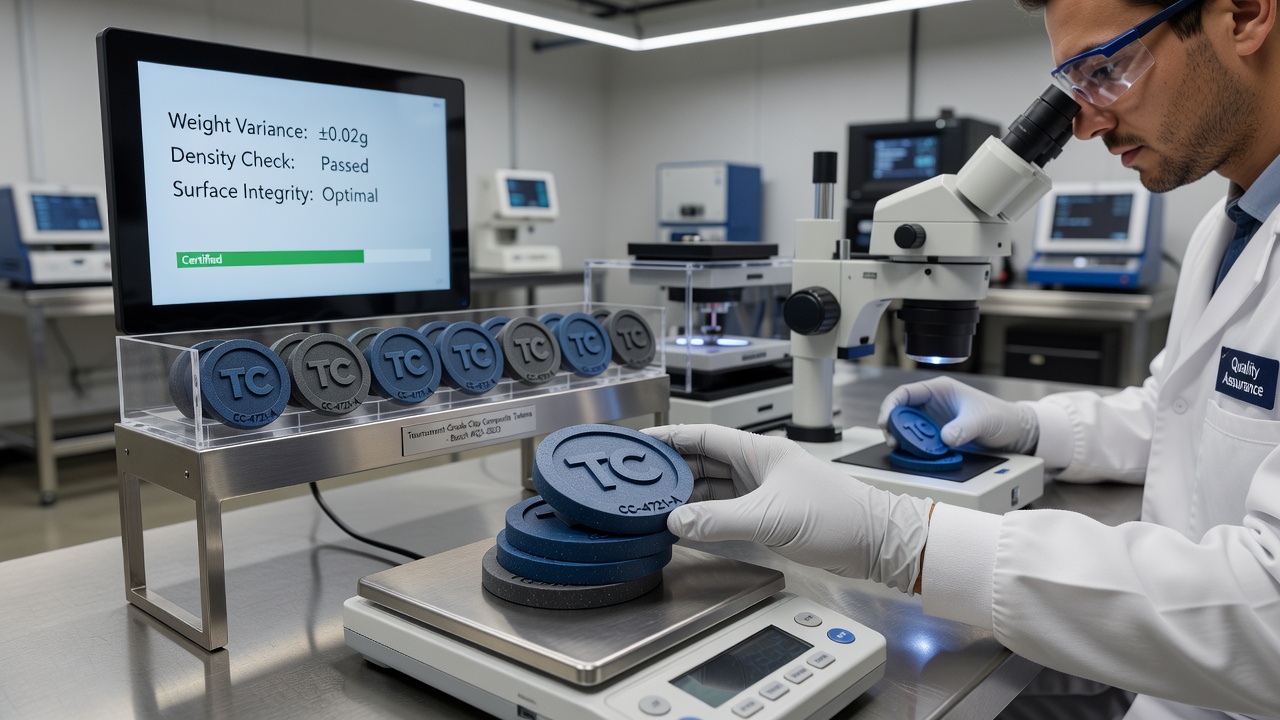
Production facilities follow documented protocols that track every stage from raw material sourcing to final molding, while independent labs measure density and surface hardness using calibrated instruments that record data points for each sample set. Observers note that July 2026 saw several state commissions update their submission requirements to include digital traceability logs that link each token batch to its originating supplier records.
These logs help tournament organizers confirm that tokens distributed across different venues share identical physical properties, and the approach reduces variation that could affect play fairness during high-stakes events.
Security Feature Verification
Security elements receive separate scrutiny once basic composition clears inspection, and technicians examine edge designs, embedded markers, and color layering that deter replication attempts. Data from regulatory audits shows that tokens lacking proper multi-layer construction fail at higher rates during simulated counterfeiting tests conducted in controlled environments.
According to figures released by the Nevada Gaming Control Board, approved clay composite tokens must demonstrate resistance to common alteration methods before they receive final clearance for circuit use. This step integrates with broader supply chain checks that trace shipments from factory to casino floor.
Performance and Durability Testing Protocols
Durability trials expose sample tokens to repeated drops, stacking pressure, and temperature fluctuations that mimic conditions found in active tournament rooms, and results feed into statistical models that predict long-term wear patterns. Labs document how tokens maintain balance after thousands of handling cycles, which matters when circuits rotate equipment between multiple sites.
Researchers at the University of Nevada, Reno have published studies on composite degradation rates that inform current testing thresholds, and these findings help standardize expectations for tokens used in extended play sessions. Tournament directors rely on this data when selecting suppliers for events scheduled through late 2026.
Regulatory Oversight and Cross-Jurisdiction Alignment
Certification does not end at teh lab level, because gaming authorities in different regions conduct their own reviews before granting approval for circulation, and coordination between these bodies ensures tokens cleared in one area meet baseline criteria elsewhere. The process includes periodic re-inspection schedules that catch any deviations introduced during storage or transport.
Industry reports from the Canadian Gaming Association highlight how aligned standards across North American circuits simplify logistics for manufacturers serving multiple clients, and this alignment reduces the need for redundant testing when tokens move between approved venues.
Documentation and Traceability Requirements
Each certified batch carries unique identifiers that link back to test records, and these identifiers appear on both physical tokens and accompanying paperwork that accompanies every shipment. Tournament staff scan these markers during setup to confirm that only approved tokens enter play, and any discrepancies trigger immediate quarantine procedures.
What's interesting is how these records also support post-event audits that verify no unauthorized substitutions occurred during the course of competition. The system creates a clear chain that investigators can follow if questions arise about token integrity.
Conclusion
Certification processes for clay composite gaming tokens combine layered inspections, performance simulations, and ongoing regulatory oversight that together maintain quality standards required by tournament circuits. As July 2026 updates continue to emphasize traceability and cross-regional consistency, manufacturers and organizers alike follow these established pathways to ensure tokens perform reliably wherever circuits operate. The framework supports secure, uniform play without introducing unnecessary complexity into daily operations.