How Regional Weather Patterns Influence Material Choices for Outdoor Gaming Surfaces at Resort Venues
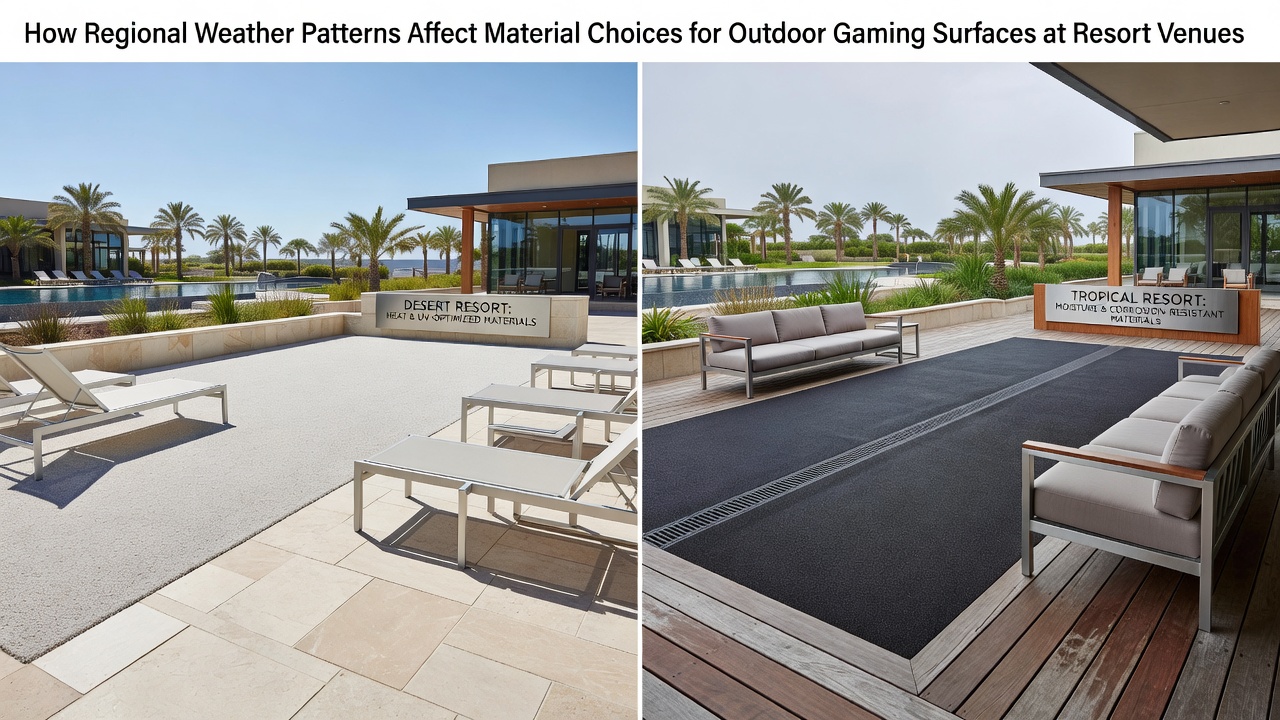
Resort venues with outdoor gaming areas face distinct challenges when selecting materials for tables and playing surfaces because regional weather patterns dictate everything from UV degradation rates to moisture absorption levels. Desert locations experience prolonged sun exposure that breaks down standard fabrics within months while coastal sites contend with salt-laden air that corrodes metal frames and accelerates fabric wear. Tropical regions bring constant humidity combined with heavy rainfall that demands surfaces capable of shedding water without warping or developing mold.
Desert and Arid Climate Adaptations
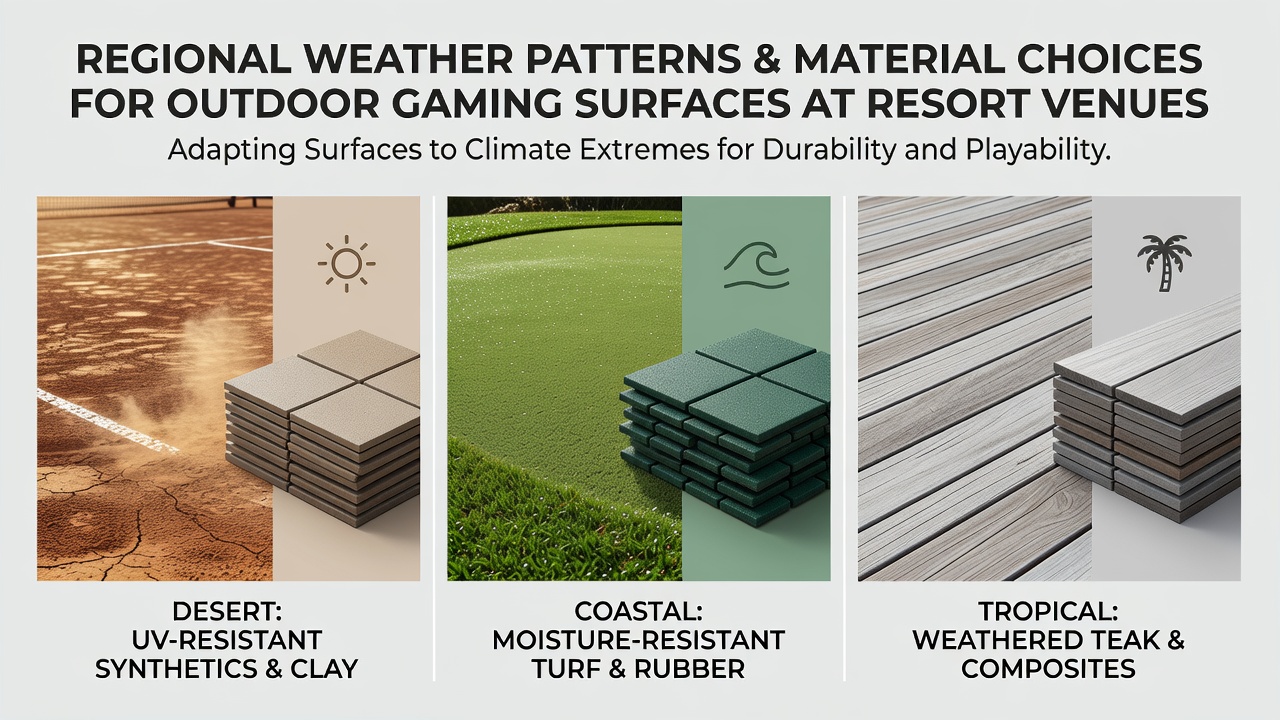
High temperatures and intense solar radiation in arid zones require materials engineered for thermal stability and ultraviolet resistance. Manufacturers incorporate UV-stabilized polymers into felt surfaces and composite tabletops so they maintain color and structural integrity under continuous exposure. Data from resort installations in the southwestern United States show that treated acrylic blends outperform untreated wool felts by retaining tensile strength for up to three times longer during peak summer months. Operators in these areas often specify powder-coated aluminum frames because they resist expansion and contraction cycles that occur daily when temperatures swing from cool nights to scorching afternoons.
Coastal and Marine Environment Demands
Salt air and high winds along coastlines create corrosive conditions that affect both visible surfaces and internal supports. Resorts in these settings choose marine-grade stainless steel hardware and sealed edge treatments to prevent rust formation on roulette wheels and poker table bases. Studies conducted along the Gulf Coast indicate that vinyl-laminated fabrics with added antimicrobial agents resist salt crystallization better than traditional wool or cotton options. Wind loads also influence design choices because lightweight surface materials must anchor securely yet remain removable for maintenance during storm events.
Humid and Tropical Weather Considerations
Constant moisture and frequent downpours in tropical climates accelerate biological growth and material swelling. Research from institutions such as the CSIRO demonstrates that synthetic turf underlays combined with perforated drainage layers maintain flat playing fields even after extended rainfall periods. Table surfaces often feature epoxy-sealed edges and quick-dry core materials so gaming can resume shortly after storms pass. In July 2026 several Southeast Asian resort properties reported successful trials of bamboo-fiber composites that offered improved breathability compared with earlier plastic formulations while still resisting fungal colonization.
Temperature Extremes and Freeze-Thaw Cycles
Northern resort locations encounter freeze-thaw cycles that test joint integrity and surface flexibility. Materials must accommodate expansion without cracking so engineers specify elastomeric coatings over rigid substrates. Data collected by Environment and Climate Change Canada shows that outdoor gaming installations in these regions benefit from closed-cell foam cores that insulate against rapid temperature shifts. Operators schedule seasonal inspections to verify that sealants around chip trays and cup holders remain intact after winter exposure.
Integration of Regional Standards and Testing Protocols
Industry groups and regulatory bodies establish performance benchmarks that guide material selection across climate zones. Testing protocols measure abrasion resistance under simulated wind-driven sand conditions for desert sites and salt spray exposure for coastal venues. European Joint Research Centre reports highlight standardized methods that evaluate long-term color retention and structural performance under combined heat and humidity stresses. Resorts coordinate with suppliers to match material certifications to local weather data so surfaces meet both safety and durability expectations.
Conclusion
Regional weather patterns continue to drive innovation in material science for outdoor gaming surfaces because each climate zone imposes unique stresses that standard products cannot withstand. Data from multiple continents confirm that tailored selections extend service life and reduce replacement frequency. Resort operators rely on these evidence-based approaches to maintain consistent playing conditions regardless of local environmental factors.