Indonesia Restricts Polymarket Access Over Classified Gambling Violations

Indonesia's Ministry of Communication and Digital Affairs has blocked access to the prediction market platform Polymarket after determining that its operations constitute illegal online gambling, and this decision follows the platform's introduction of trading contracts tied directly to the political future and longevity of President Prabowo Subianto with notably low odds placed on his potential removal by year-end.
Officials classified the specific contracts as a form of prohibited betting activity under existing national laws, which treat such prediction markets as unauthorized gambling operations rather than legitimate financial instruments, and enforcement teams moved quickly to restrict user access across the country once the content came under review.
Details of the Platform's Political Contracts
Polymarket enabled users to trade contracts on various outcomes related to President Prabowo Subianto's tenure, including the probability of his departure from office before the end of the calendar year, and reports indicate that these markets attracted attention because the odds suggested minimal likelihood of early removal, yet the mere presence of these contracts triggered regulatory scrutiny in Indonesia.
The ministry's action aligns with established procedures for identifying and shutting down sites that facilitate wagers on real-world events, particularly those involving public figures, while Polymarket operates as a decentralized platform where participants buy and sell shares representing different possible results.
Broader Enforcement Context in Indonesia
This restriction forms part of ongoing efforts by Indonesian authorities to curb online gambling nationwide, and the country ranks as the world's fourth-most populous nation with a large population of internet users who remain subject to these controls, so regulators have intensified monitoring of platforms that blend financial trading with event-based predictions.
According to available records from the reporting on the enforcement action, the ministry applied standard blocking measures once the political contracts appeared, and similar steps have targeted other sites offering comparable services without licenses from local gaming authorities.
Regulatory Classification Process
Ministry personnel examined the contracts offered on Polymarket and concluded that they met the legal definition of online gambling because participants risked funds on uncertain future events with potential payouts, and this determination led directly to the access restrictions without prior public warning in most cases.
Those familiar with Indonesian digital policy note that platforms must secure explicit approval before offering any form of betting or prediction services, whereas Polymarket's structure relies on cryptocurrency-based trading that falls outside traditional financial oversight channels in the region.
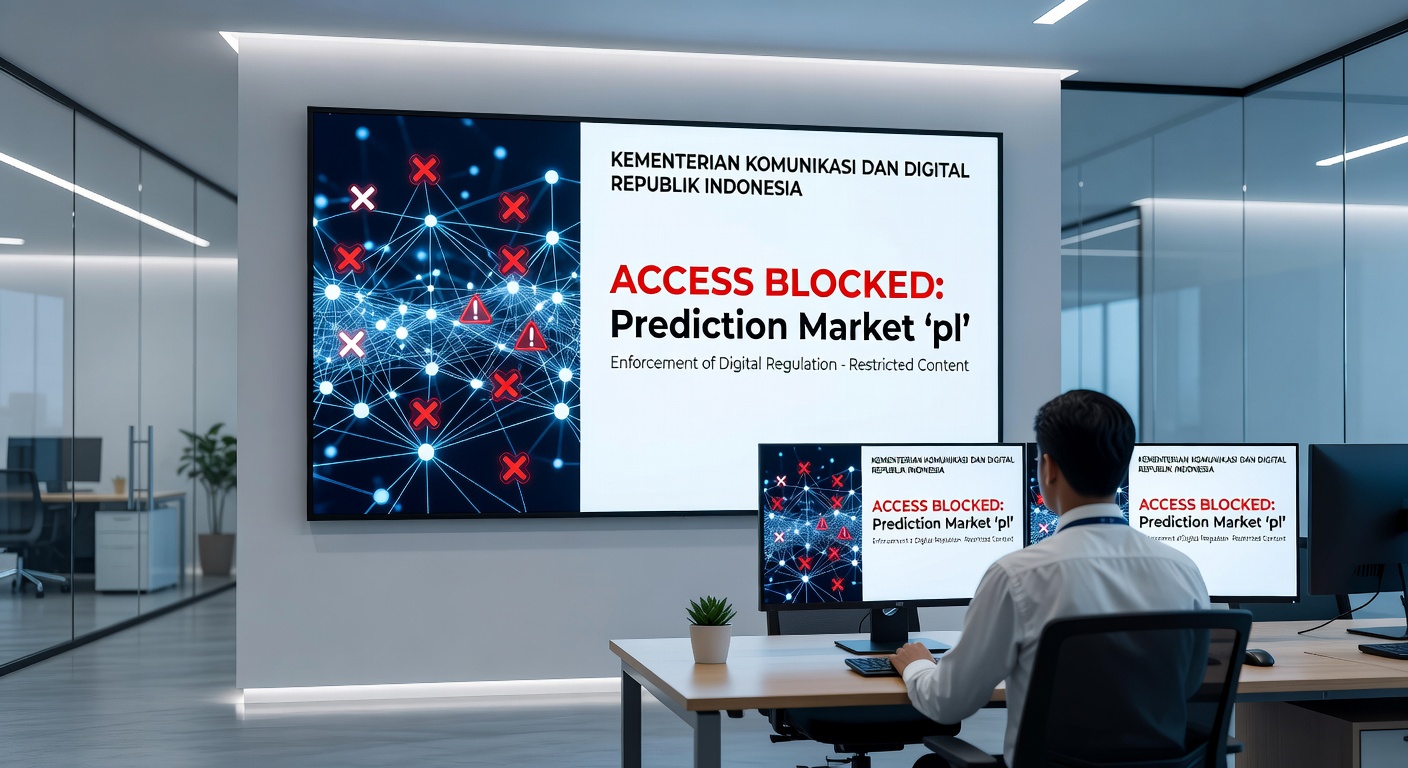
Enforcement teams collaborated with internet service providers to implement the blocks at the network level, and this approach prevents domestic users from reaching the site while leaving the platform operational in other jurisdictions where such contracts may face different rules.
Impact on Platform Users and Operations
Users inside Indonesia encountered immediate inability to load Polymarket pages or place additional trades after the restrictions took effect, and existing positions became inaccessible through standard connections, prompting some to explore workarounds that remain subject to further regulatory response.
The platform itself has not issued detailed public statements on the specific Indonesian action, yet similar blocks in other markets have prompted adjustments to contract offerings or regional access controls in the past, and observers track these developments through public announcements from affected companies.
Legal Framework Supporting the Decision
Indonesia maintains strict prohibitions on unlicensed gambling activities both online and offline, and these rules extend to prediction markets when they involve direct wagering on political or personal outcomes rather than purely economic indicators, so the ministry applied established statutes without creating new precedents in this instance.
Data from regulatory filings shows consistent application of these laws across multiple digital services over recent years, and the Polymarket case fits the pattern of targeting platforms that introduce contracts on high-profile figures or events without local authorization.
Conclusion
The blocking of Polymarket represents a targeted application of Indonesia's existing online gambling regulations to a specific set of political prediction contracts, and authorities continue to monitor similar platforms for compliance with national standards while maintaining network-level restrictions to enforce the classification as illegal activity.