Navigating Import Regulations for Professional Gaming Cards and Dice in Cross-Border Casino Projects

Cross-border casino developments rely on precise coordination when moving professional gaming cards and dice across multiple jurisdictions, and those shipments encounter layered import rules that vary by country and material composition. Regulatory frameworks address product standards, tariff classifications, and security features designed to prevent counterfeiting or unfair play. Observers note that cards and dice often fall under specific harmonized system codes that trigger additional scrutiny at borders because of their role in regulated gaming environments.
Classification and Tariff Structures
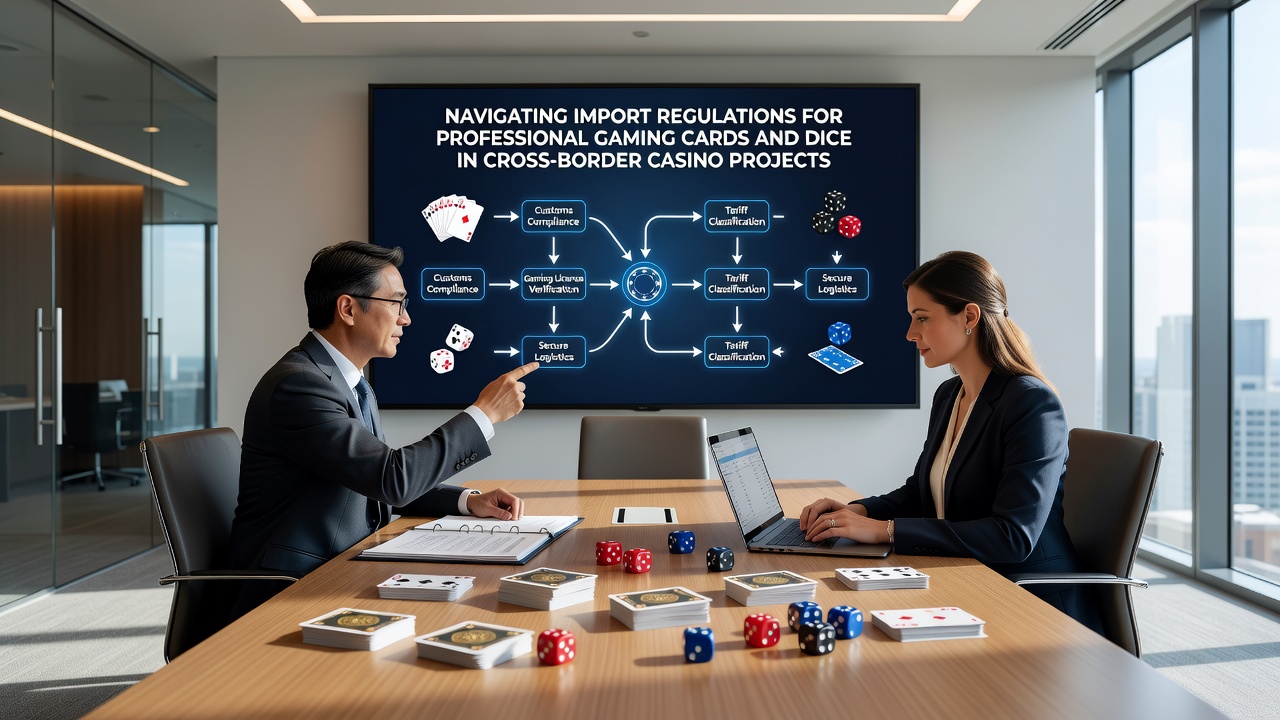
Customs authorities classify gaming cards under headings that cover printed matter while dice typically align with articles made from plastics or composites, and these distinctions determine applicable duties along with any anti-dumping measures that apply to certain manufacturing regions. Data from trade databases shows that misclassification remains a common delay factor in equipment shipments for new casino floors. Projects spanning North America and Asia must reconcile differing valuation methods, where one jurisdiction bases duties on transaction value while another incorporates royalties or licensing fees tied to brand markings on the dice or card backs.
Material and Safety Compliance Requirements
Many markets impose chemical and flammability standards on the cellulose acetate or polymer blends used in professional dice, and cards must meet restrictions on inks or coatings that could contain restricted substances under international chemical conventions. Shipments arriving in July 2026 for Southeast Asian casino expansions face heightened checks on polyvinyl chloride content following recent updates to regional environmental import lists. Compliance documentation often includes third-party laboratory reports that verify absence of heavy metals or phthalates, and these records must accompany each consignment through port clearance procedures.
Security Features and Certification Demands
Professional-grade cards incorporate microprinting, UV inks, and serialized edges that regulatory bodies in destination countries require to be registered before import, while dice frequently include precision weighting certifications that prove adherence to fairness tolerances. One study from a North American trade research group revealed that unregistered security elements led to holds lasting several weeks at major ports during the first half of 2026. Casino operators therefore coordinate with manufacturers to pre-file product specifications with agencies such as the U.S. Customs and Border Protection automated systems, which reduces inspection times when equipment reaches final assembly sites.
Logistics teams handling floating casino projects or land-based resorts in multiple countries must also navigate rules that treat gaming equipment as potential vectors for organized crime concerns, prompting some jurisdictions to mandate end-user certificates and background checks on importers. These steps integrate with standard commercial invoices and bills of lading, yet they extend lead times beyond typical manufacturing cycles for tournament-grade decks.
Regional Variations in Documentation
European Union member states apply common external tariff rules yet maintain separate national gaming authority approvals that affect how dice sets enter through Rotterdam or Hamburg ports, whereas Australian import processes emphasize proof that products meet local casino control standards before release from bonded warehouses. Canadian authorities, by contrast, focus on excise tax implications when cards contain specific foil elements, requiring separate filings through the Canada Border Services Agency alongside standard customs declarations. Projects that source from multiple suppliers must consolidate these varying paperwork streams into unified compliance packages to avoid staggered release dates that disrupt construction schedules.
Case Examples from Recent Expansions
Teams equipping a multi-site development in the Pacific region during spring 2026 encountered delays when dice shipments from one supplier lacked updated certificates of origin, forcing rerouting through alternative ports with more flexible verification protocols. Another project linking venues across the Middle East and North America used bonded temporary admission procedures that allowed samples to clear for testing without full duty payment, provided the goods remained under customs seal until final installation. Such mechanisms prove especially useful when prototypes require on-site validation against local fairness regulations before mass quantities arrive.
Emerging Digital Tracking Integration
Authorities increasingly accept electronic manifests and blockchain-verified certificates for gaming components, which allows real-time status checks during transit and reduces paper-based discrepancies at inspection points. Research from international logistics institutes indicates that carriers adopting these systems reported clearance times shortened by up to thirty percent for high-value equipment consignments in the second quarter of 2026. Casino project managers therefore align supplier data systems with customs portals early in the procurement phase to maintain momentum through complex regulatory checkpoints.
Conclusion
Successful navigation of import regulations for professional gaming cards and dice hinges on early classification analysis, comprehensive material certifications, and synchronized documentation across jurisdictions. Cross-border casino projects that integrate these elements from the planning stage experience fewer interruptions at ports and maintain tighter control over equipment delivery timelines. Continued alignment between manufacturers, logistics providers, and regulatory agencies supports smoother expansion of gaming facilities worldwide.