Precision Engineering Standards Governing Roulette Wheel Axle Alignments in Regulated Venues
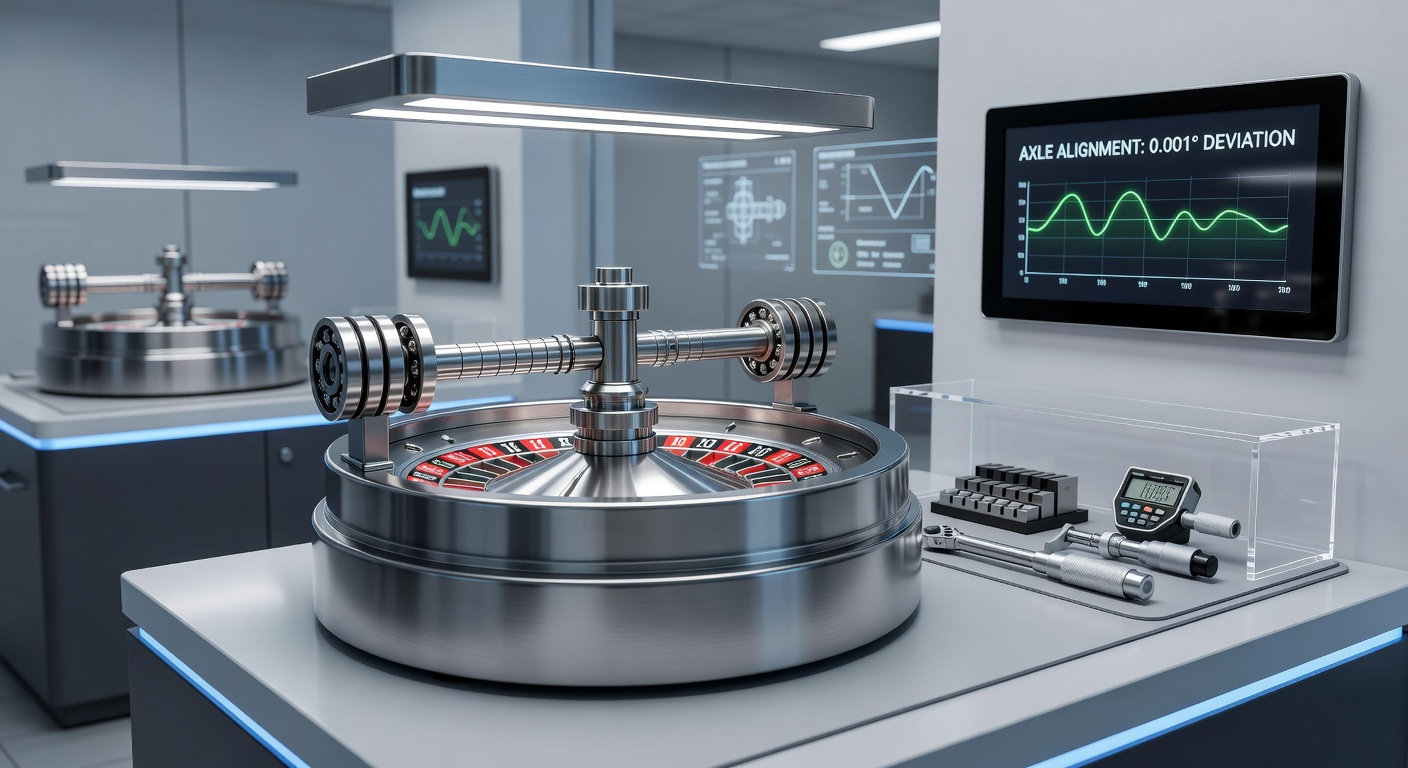
Regulated gaming venues rely on strict engineering protocols to maintain roulette wheel integrity, and axle alignment stands at the core of those requirements because even minor deviations can influence ball behavior over extended play periods. Standards from multiple jurisdictions specify exact tolerances for spindle straightness, bearing concentricity, and overall rotational balance, with measurements typically expressed in microns rather than millimeters to eliminate any possibility of bias. Technicians perform these checks using calibrated laser interferometers and digital dial indicators that record data points across full 360-degree rotations, while software algorithms compare results against predefined thresholds set by oversight bodies.
Regulatory Frameworks Across Regions
Authorities in Nevada enforce alignment specifications through the Gaming Control Board, which mandates annual inspections plus random audits throughout the year, and similar rules appear in other North American markets where state or provincial regulators reference ISO 1101 geometric dimensioning guidelines adapted for gaming equipment. In Australia the relevant commissions require documented proof of axle trueness before any wheel enters service, with records retained for at least seven years so investigators can trace performance history if disputes arise. European regulators, operating under varying national frameworks, have begun harmonizing axle tolerance limits through CEN technical committees, aiming for consistent measurement methods that cross borders without repeated recalibration.
Data collected during routine verifications shows that wheels passing initial factory tests still require field adjustments after transport and installation because vibration during shipping can shift bearing seats by several microns. Maintenance teams therefore repeat full alignment protocols whenever a wheel is moved between tables or after any impact event, and June 2026 brought updated digital reporting templates in several jurisdictions that now capture temperature and humidity readings alongside alignment metrics because thermal expansion affects metal components differently than composite rotors.
Measurement Techniques and Equipment
Engineers employ a combination of contact and non-contact methods to confirm axle alignment. A precision mandrel inserted into the spindle bore serves as a reference surface while laser trackers positioned at multiple angles record runout values, and any reading exceeding 8 microns total indicated runout triggers corrective action before the wheel returns to play. Bearings themselves undergo separate concentricity tests using air-gage systems that detect ovality in the inner race, since even slight imperfections here translate directly into wobble at the rotor level.

Calibration of these instruments follows traceable standards maintained by national metrology institutes, with certificates renewed quarterly so that reported figures remain defensible during regulatory reviews. Technicians log each measurement sequence in encrypted databases that timestamp every data point and automatically flag outliers for supervisory review, reducing human transcription errors that once plagued paper-based systems.
Material Specifications and Assembly Practices
Axles in modern professional wheels are typically machined from precipitation-hardening stainless steel chosen for its dimensional stability and corrosion resistance under constant exposure to cleaning solvents. Manufacturers hold concentricity between bearing journals and the main shaft to within 3 microns, verified by coordinate measuring machines before any plating or finishing steps occur. Assembly occurs in climate-controlled clean rooms where particulate levels stay below ISO Class 5 to prevent contamination that could later create uneven wear patterns.
Once installed, the axle interfaces with a thrust bearing assembly designed to accommodate both radial and axial loads generated by the spinning rotor, and preload settings receive verification using torque wrenches calibrated to manufacturer specifications. Observers note that facilities maintaining higher inspection frequencies report fewer instances of gradual drift, because early detection allows minor shimming adjustments rather than full component replacement.
Impact on Game Integrity and Compliance
Aligned axles contribute directly to statistical randomness required by gaming statutes, since any persistent tilt or eccentricity introduces measurable bias detectable through long-term outcome analysis. Compliance officers cross-reference physical inspection reports against electronic logs from wheel sensors that track rotational speed and deceleration curves, creating multiple independent data streams that must align within accepted variance bands. When discrepancies appear, venues must remove the wheel from service until re-alignment and re-testing confirm compliance, a process that typically takes several hours depending on the extent of adjustment needed.
Training programs for maintenance personnel emphasize both the theoretical basis of geometric tolerancing and the practical operation of alignment equipment, with certification renewals required every two years to keep skills current amid evolving instrumentation. Industry associations publish updated best-practice guides that incorporate feedback from field technicians, helping standardize procedures across different regulatory environments without mandating identical equipment lists.
Conclusion
Precision engineering standards for roulette wheel axle alignments continue to evolve alongside advances in metrology and data analytics, yet the fundamental requirement remains unchanged: measurable, repeatable verification that every wheel meets tolerance limits before and during operation. Regulated venues that invest in proper equipment, training, and documentation demonstrate consistent compliance across jurisdictions, while the integration of digital logging systems has improved traceability without altering core mechanical principles. As new measurement technologies emerge, oversight bodies evaluate them against existing performance criteria rather than replacing established methods outright, ensuring continuity in fairness verification while accommodating incremental improvements in accuracy and efficiency.