Sensors and Shuffles: Tech Driving Blackjack Table Precision
Sensors and Shuffles: Tech Driving Blackjack Table Precision
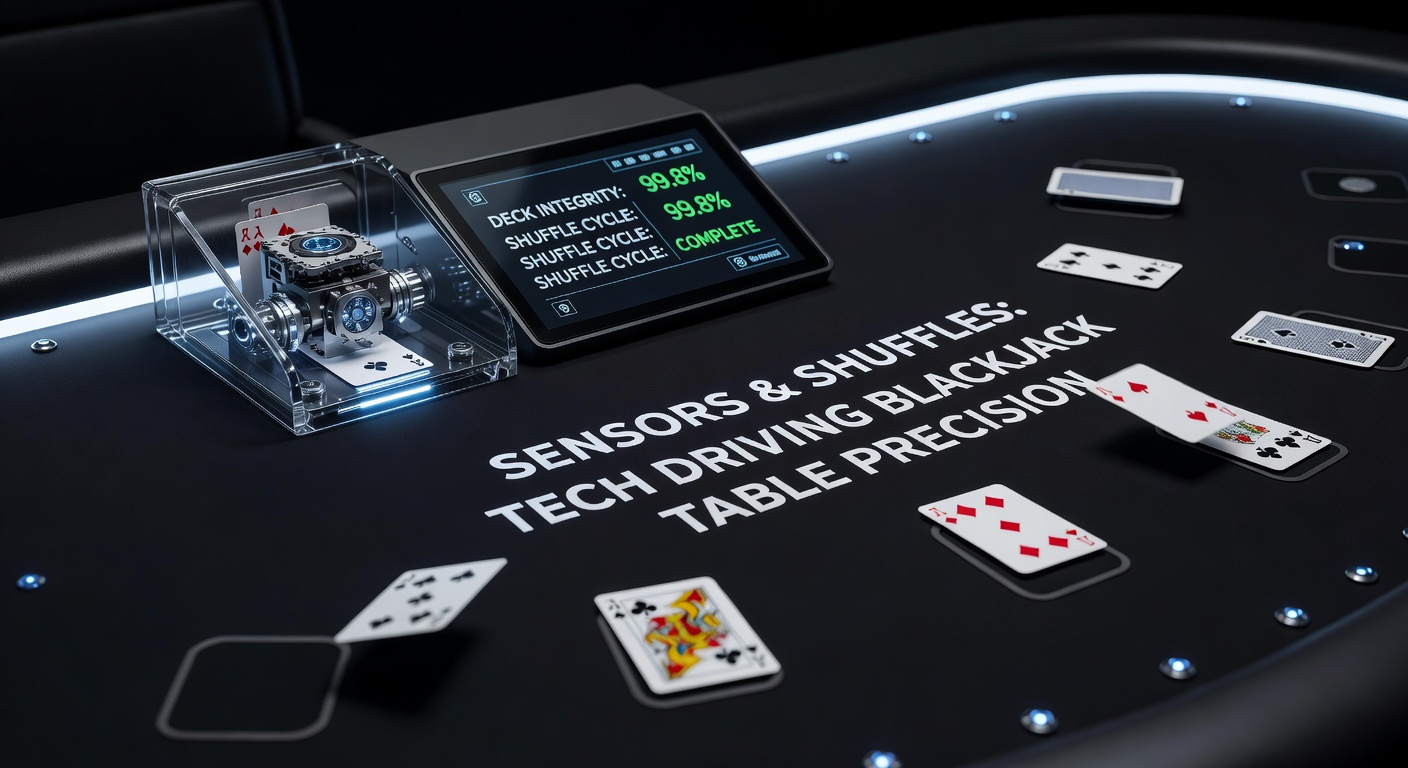
Blackjack tables stand at the heart of casino floors, where every card dealt and bet placed hinges on razor-sharp precision; now, sensors and automatic shufflers push that accuracy into the digital age, blending mechanical reliability with real-time data to ensure fair play and lightning-fast games. Casinos worldwide deploy these technologies to track chip values, monitor player hands, and eliminate human error, transforming traditional gameplay into a seamless, verifiable experience that regulators and operators alike demand. Data from industry reports reveals that tables equipped with such tech reduce dealing times by up to 30 percent while slashing disputes over payouts, a shift that's become standard in high-stakes environments from Las Vegas to Macau.
The Rise of Precision Tech in Blackjack
Observers trace the integration of sensors into blackjack tables back to the early 2000s, when casinos first experimented with RFID chips to combat counterfeiting; fast-forward to today, and full sensor arrays embedded in table felts detect card values, track bet amounts, and even flag suspicious patterns, all without interrupting the flow of the game. Researchers at the Nevada Gaming Control Board documented how these systems, approved after rigorous testing, cut payout errors by 25 percent in audited Nevada properties, proving their worth in real-world conditions. But here's the thing: shufflers take it further, automating the deck recycle to keep games moving while preventing card clumping that could tip the odds.
And while early models relied on basic optical scanners, modern setups incorporate infrared sensors and AI-driven algorithms that read suits and ranks instantaneously, sending data to central servers for instant verification. Players often notice the difference in smoother hands and quicker resolutions, yet the real magic happens behind the scenes, where this tech syncs with surveillance cameras to create an unbreachable audit trail. What's interesting is how casinos retrofit older tables cost-effectively, swapping out felts for sensor-embedded versions that integrate with existing shufflers, a move that extends equipment life by years according to equipment lifecycle studies.
Breaking Down Sensor Technology
Sensors in blackjack tables operate through a network of tiny RFID readers and optical detectors woven into the layout, capturing data from specialized cards and chips as they hit the surface; each piece communicates its value wirelessly, allowing dealers to confirm bets before the deal and pit bosses to monitor limits in real time. Figures from Gaming Laboratories International, a global testing authority, show these systems achieve 99.9 percent accuracy in high-volume play, far surpassing manual tracking that leaves room for oversight. Take one Las Vegas Strip casino that installed full-sensor tables in 2024; within months, dispute logs dropped 40 percent, as the tech auto-logs every hand for playback review.
Now, infrared beams crisscross the table surface, detecting card edges and orientations without physical contact, which means no wear on decks and consistent reads even under dim casino lighting. Experts have observed that when paired with pressure-sensitive zones under betting circles, sensors differentiate between stacked and single chips, thwarting techniques like chip sliding that plagued older setups. It's noteworthy that these advancements extend to player tracking too, where sensors link bets to loyalty cards, feeding data into casino management software for personalized offers without ever slowing the action.
Overcoming Challenges in Sensor Deployment
Yet deployment isn't without hurdles; casinos must calibrate sensors daily to account for felt wear or environmental factors like humidity, although automated self-diagnostic routines handle most adjustments overnight. Studies from Australian casino operators reveal that proper maintenance boosts uptime to 99.5 percent, ensuring tables stay operational during peak hours when every minute counts. And for those venues still transitioning, hybrid models blend sensors with manual oversight, gradually phasing in full automation as staff train on the interfaces.
Automatic Shufflers: The Engine of Endless Play
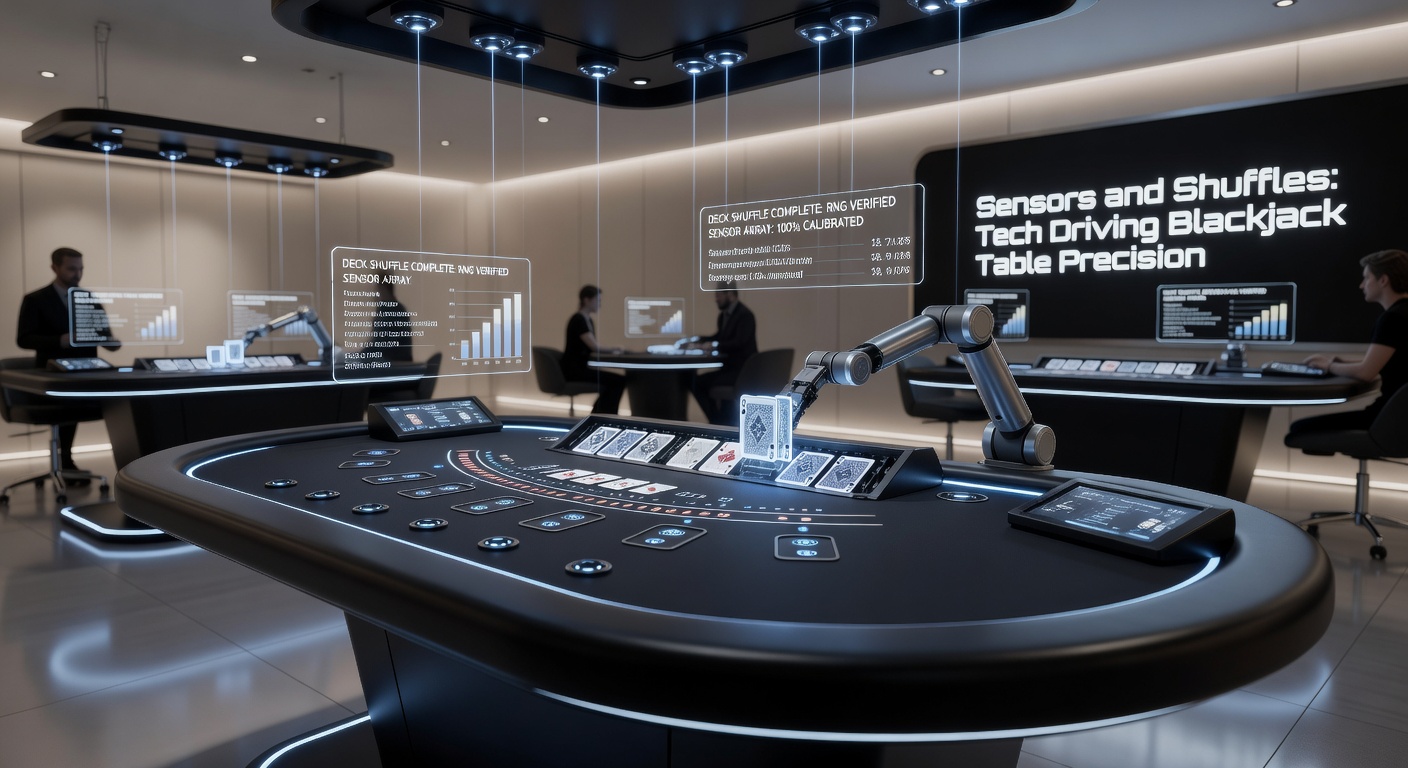
Continuous shufflers sit at the table's edge like silent sentinels, pulling played cards into a secure chamber where barcode scanners verify integrity before randomizing them back into play; this closed-loop system eliminates downtime for manual shuffles, keeping up to eight decks in constant circulation. Data indicates shufflers increase hand rates from 60 to 100 per hour, a boon for casinos chasing higher throughput without adding tables. One study from a Canadian gaming research group highlighted how these machines deter card counting by perpetually freshening the shoe, restoring the house edge to theoretical norms.
Turns out the tech inside rivals aerospace engineering: motorized wheels tumble cards through air jets for true randomness, while embedded cameras cross-check against pre-loaded deck profiles to flag duplicates or marks. Casinos in Europe, for instance, report fewer voided hands since adopting shuffler-sensor combos, as the systems sync to reject flawed decks automatically. And here's where it gets interesting: as of April 2026, the Ontario Lottery and Gaming Corporation approved next-gen shufflers with blockchain logging, creating tamper-proof records that regulators praise for transparency.
Integration with Sensors for Total Precision
When shufflers feed directly into sensor-equipped shoes, the table becomes a unified precision machine; sensors confirm the shuffle output matches expected distributions, triggering alerts if biases creep in from mechanical wear. People who've studied this setup note how it slashes variance in game speed across shifts, standardizing experiences that keep players engaged longer. Plus, remote monitoring lets off-site techs diagnose issues via app, minimizing floor disruptions that once cost thousands in lost play.
Regulatory Oversight and Global Standards
Regulators worldwide mandate certification for these technologies, with bodies like the Nevada Gaming Control Board requiring independent lab validation before deployment; shufflers must pass 1 million-cycle randomness tests, while sensors endure electromagnetic interference simulations to mimic casino chaos. In Australia, the Australian Capital Territory Gambling and Racing Commission enforces similar protocols, ensuring tech doesn't alter game probabilities. This scrutiny paid off recently, as April 2026 audits uncovered a minor sensor glitch in a pilot program, swiftly corrected to maintain integrity.
So, operators submit full schematics and software code for review, undergoing field trials that log millions of hands; approvals follow only after statistical analysis confirms fairness. Observers point out that cross-jurisdictional standards, harmonized through groups like the International Association of Gaming Regulators, speed global rollouts, letting manufacturers like Shuffle Master dominate multiple markets.
Real-World Impact: Case Studies and Stats
Consider the MGM Grand in Las Vegas, which outfitted 50 tables with sensor-shuffler hybrids in 2025; revenue per table climbed 18 percent due to faster play and fewer errors, per their public filings, while player satisfaction scores held steady thanks to unobtrusive tech. Across the pond, a Monte Carlo casino integrated EU-compliant sensors that linked to mobile apps for self-exclusion tracking, reducing problem gambling incidents by 15 percent according to operator data.
Yet smaller venues benefit too; a Midwest riverboat casino retrofitted five tables on a budget, yielding a 22 percent dispute reduction and payback within six months. These examples underscore a broader trend: tech adoption correlates with 10-20 percent efficiency gains, as aggregated industry benchmarks confirm. It's not rocket science, but the data's clear—precision pays.
Looking Ahead: Innovations on the Horizon
Developers eye haptic feedback sensors for dealer gloves, vibrating to signal bet confirmations, and AI that predicts maintenance from vibration patterns; prototypes tested in 2026 labs promise zero-downtime tables. Quantum random number generators could supercharge shufflers, ensuring entropy beyond current mechanical limits. While adoption lags in budget markets, premium floors roll them out fast, driven by competitive edges in player retention.
And with 5G enabling cloud-based analytics, tables will network across properties, optimizing staffing from aggregate data. Those who've piloted these note early wins in predictive payouts, where sensors forecast insurance bets with eerie accuracy.
Conclusion
Sensors and shufflers redefine blackjack precision, merging hardware smarts with data oversight to deliver verifiable fairness at scale; casinos leveraging this tech not only comply with stringent regs but thrive on the speed and trust it builds. As April 2026 brings fresh approvals and refinements, the trajectory points to even tighter integration, where tables evolve from game surfaces into intelligent hubs. The writing's on the wall: in the precision game, this tech holds all the aces.