The Craftsmanship Standards Elevating Professional Gaming Card Decks for Tournament Play
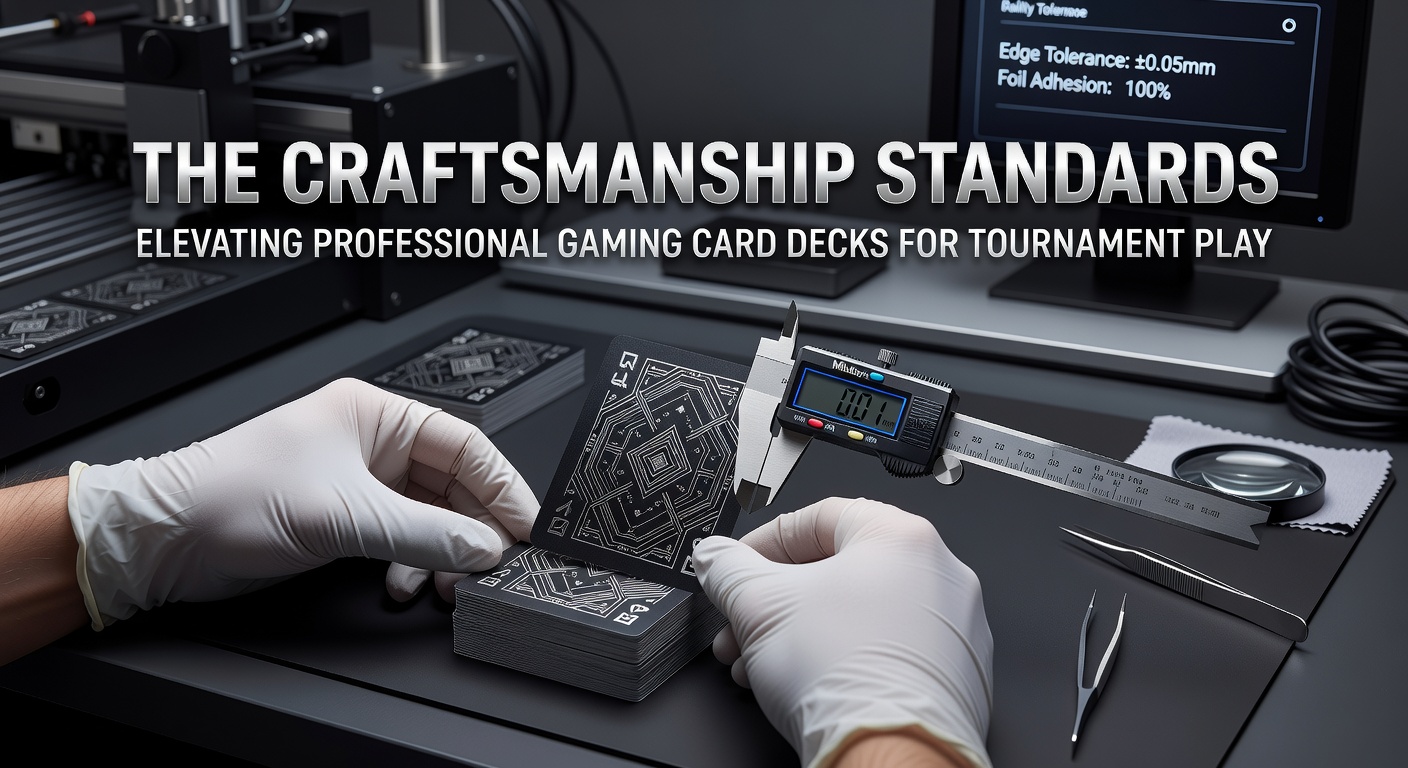 Professional gaming card decks used in tournament environments undergo rigorous production protocols that prioritize uniformity, durability, and tamper resistance. These standards have evolved through collaboration between manufacturers and regulatory bodies to meet the demands of high-stakes play where even minor inconsistencies can affect outcomes. In June 2026 data from multiple jurisdictions shows continued adoption of enhanced card specifications across major tournament circuits.
Material Selection and Composition Requirements
Manufacturers select substrates that combine cellulose fibers with polymer coatings to achieve specific weights and flex characteristics, typically ranging from 280 to 310 grams per square meter. These composites resist warping under repeated shuffling while maintaining the snap required for professional dealing. Research from the International Association of Gaming Regulators indicates that decks produced with multi-layer laminates demonstrate 40 percent greater longevity compared to single-ply alternatives in controlled wear tests.
Coatings applied during finishing stages incorporate micro-textures that optimize friction coefficients for automated shufflers and manual handling alike. Such treatments also embed invisible security markers detectable under specific lighting conditions, allowing tournament officials to verify authenticity without disrupting gameplay flow.
Precision Cutting and Edge Finishing Processes
Computer-guided cutting systems produce decks with edge tolerances measured in microns, ensuring every card aligns perfectly during stacking and dealing sequences. This level of accuracy prevents the formation of burrs or irregularities that could otherwise create identifiable patterns exploitable by observant players. Facilities certified under ISO 17025 protocols conduct batch sampling where technicians measure thousands of individual cards per production run to confirm compliance.
Corner rounding follows exact radius specifications that facilitate smooth rotation during riffle shuffles, while the overall deck height remains consistent within 0.2 millimeters across entire production lots. These parameters support interoperability between different tournament venues that may source decks from multiple approved suppliers.

Security Features Embedded During Production
Modern card decks incorporate several layers of authentication that extend beyond visible design elements. Microprinting along borders, UV-reactive inks, and serialized batch codes allow verification through handheld scanners used by floor supervisors. According to figures released by the Nevada Gaming Control Board, these integrated features have contributed to a measurable decline in reported substitution incidents at sanctioned events over the past three years.
Some suppliers embed RFID tags within the core layers of premium decks, enabling real-time tracking from warehouse to table. This technology supports chain-of-custody documentation required under current tournament licensing frameworks without altering the physical handling properties players expect.
Consistency Standards Across Tournament Circuits
Tournament organizers enforce strict specifications that require all decks to perform identically regardless of manufacturer. This includes standardized back designs with complex patterns that obscure any potential marking attempts, along with identical card stock performance under varying humidity and temperature conditions common in event spaces. Joint testing programs between suppliers and gaming commissions verify these attributes before decks receive approval for use.
Periodic audits examine decks pulled from active play to confirm they continue meeting original specifications after thousands of shuffles. Results from these reviews feed back into production adjustments, creating an iterative improvement cycle that maintains quality across global operations.
Regulatory Updates Influencing Deck Specifications
June 2026 has seen several jurisdictions update their technical requirements for gaming cards, with emphasis on traceability and environmental considerations in raw material sourcing. The Malta Gaming Authority recently published revised guidelines that align with broader European standards for product integrity in licensed venues. These updates encourage manufacturers to document every stage from fiber sourcing through final packaging.
Industry groups such as the American Gaming Association have facilitated working sessions where regulators and producers align on measurement methodologies, reducing discrepancies that previously arose when decks crossed regional boundaries. Such harmonization supports larger international tournament series that rotate locations frequently.
Conclusion
The elevation of craftsmanship standards for professional gaming card decks reflects ongoing coordination between technical innovation and regulatory oversight. Precision in materials, cutting, and security integration ensures decks meet the exacting requirements of tournament environments where consistency directly supports fair play. As specifications continue to refine through data-driven reviews, the industry maintains reliable equipment standards that tournament operators worldwide depend upon.