The Supply Chain Logistics Behind Sourcing Authentic Blackjack Felt for International Casino Expansions
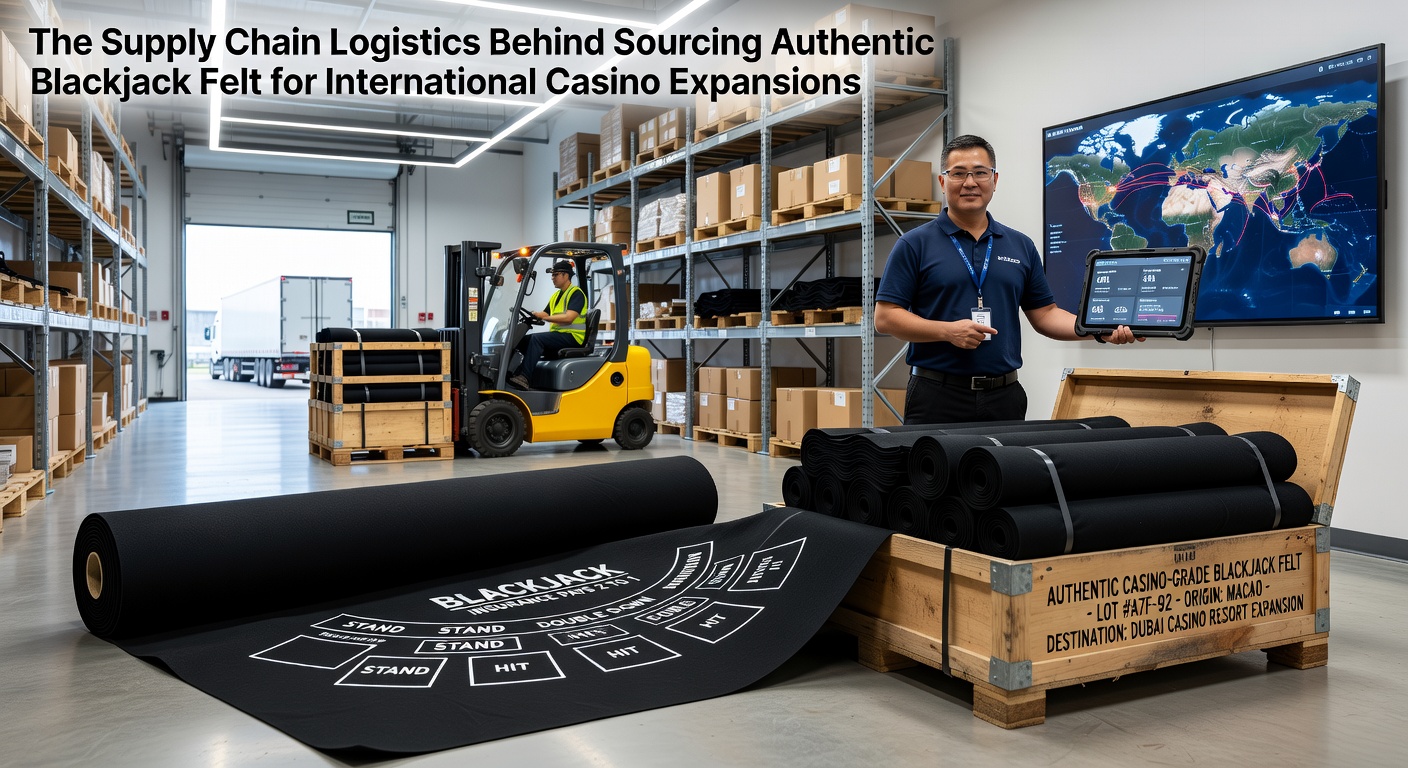
Casino operators expanding into new international markets face intricate supply chain demands when securing authentic blackjack felt, a specialized textile that directly influences gameplay speed, card control, and table longevity. This material typically consists of a wool-nylon blend engineered for consistent friction and resistance to wear under heavy use, and its procurement spans raw fiber sourcing through custom finishing and cross-border delivery.
Raw Material Origins and Initial Processing
Authentic blackjack felt starts with high-grade wool fibers harvested primarily from sheep in regions like Australia and New Zealand, where climate conditions produce dense, resilient staples suitable for casino-grade textiles. Processors then blend these fibers with synthetic nylon filaments at mills located in Europe or North America to achieve the precise weight and nap required for professional tables. Data from textile trade reports shows that Australian wool exports to fabric manufacturers increased steadily through early 2026 as demand rose alongside new casino projects in Asia and the Middle East.
Once blended, the material undergoes scouring, carding, and weaving at specialized facilities that maintain strict tolerances for thickness and color uniformity, typically in deep green or custom shades specified by casino designers. These steps occur before any felt reaches table fabricators, ensuring the base cloth meets durability standards set by gaming equipment suppliers.
Manufacturing Standards and Customization
Table felt manufacturers apply additional treatments such as flame retardancy and moisture resistance during finishing, processes often concentrated in facilities across Italy and the United States. Observers note that these treatments extend service life in high-traffic environments where tables operate continuously. Customization for international projects includes die-cutting to exact table dimensions and adding printed layouts that comply with local gaming regulations.
Production runs for large expansions require coordination between felt weavers and casino furniture builders, with lead times stretching several months due to the need for sample approvals and batch consistency testing. In May 2026 several operators in Southeast Asia placed orders for felt destined for new integrated resorts, highlighting how manufacturing schedules align with construction timelines.
Global Logistics and Distribution Networks
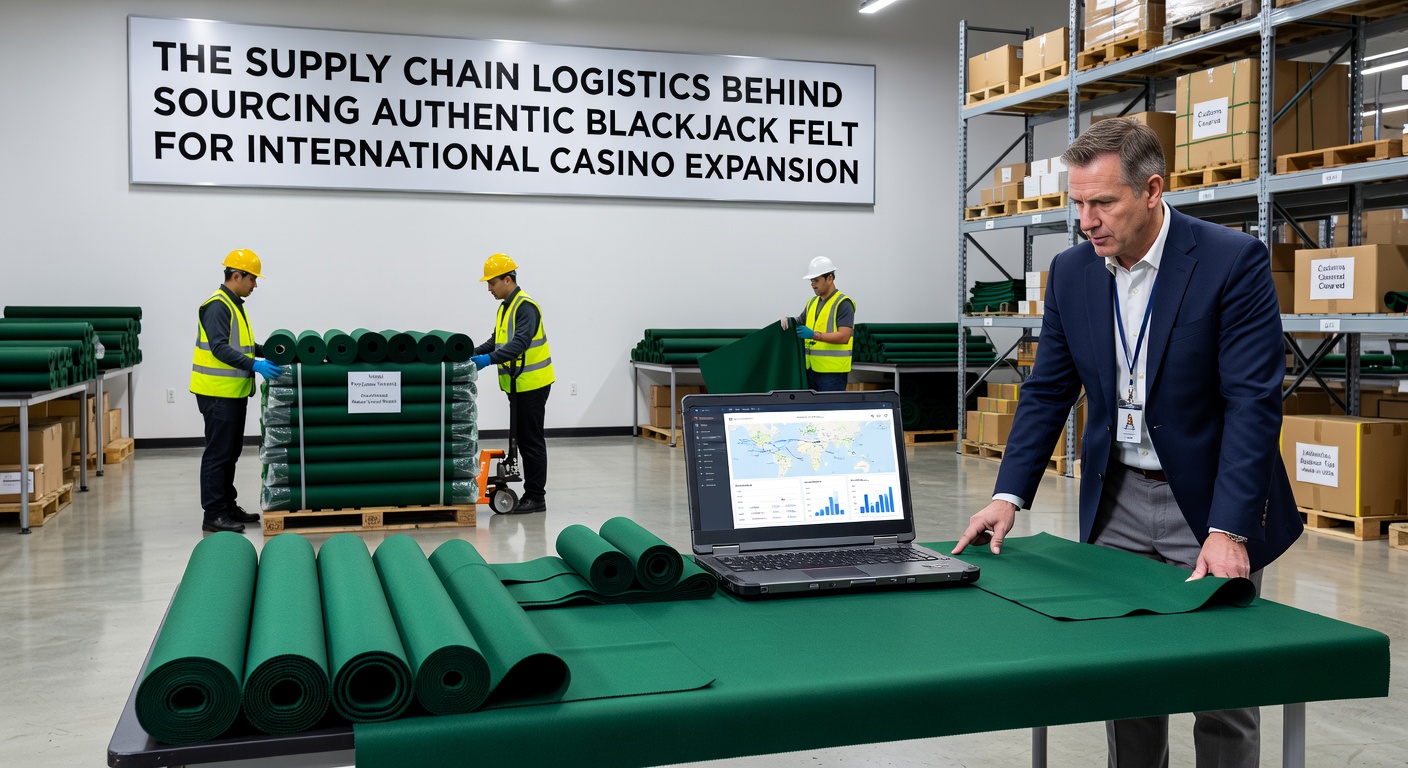
Once finished, rolls of blackjack felt travel via ocean freight or air cargo depending on project urgency and volume. Major ports in Rotterdam, Singapore, and Los Angeles serve as key hubs where containers clear customs inspections that verify textile safety certifications and origin documentation. Logistics providers coordinate temperature-controlled storage to prevent fiber distortion during long voyages, particularly on routes crossing equatorial zones.
International expansions introduce variables such as tariffs on imported textiles and varying import quotas, factors that supply chain managers track through regulatory updates from bodies like the International Trade Administration. Delivery schedules often incorporate buffer periods to account for port congestion or inspection delays, especially when multiple casino sites activate simultaneously across different continents.
Quality Assurance Across Borders
Quality checks occur at multiple points along the chain, beginning with fiber grading at the source and extending to final inspection upon arrival at the casino site. Independent laboratories test samples for tensile strength, colorfastness, and friction coefficients to confirm the felt performs within casino specifications. Those who manage these verifications report that deviations detected late in transit can trigger costly reorders or on-site adjustments.
Traceability systems now link each batch to its mill origin and treatment records, a practice encouraged by industry groups seeking to reduce counterfeit materials in global casino builds. This documentation proves essential when operators must demonstrate compliance with equipment standards during licensing reviews.
Challenges in 2026 Expansion Cycles
Supply disruptions from seasonal wool availability or shifts in shipping capacity continue to affect timelines for projects slated for completion later in 2026. Casino developers in emerging markets often source through consolidated suppliers who maintain regional warehouses, yet sudden surges in demand can strain these networks. Figures from trade data indicate that felt shipments to new Asian facilities rose notably in the first quarter of the year, prompting some operators to secure advance contracts with multiple mills.
Sustainability requirements add another layer as certain jurisdictions now request documentation on responsible wool sourcing and reduced chemical use in finishing. Suppliers respond by adjusting procurement from certified farms while preserving the performance characteristics essential for authentic casino play.
Conclusion
The logistics of sourcing authentic blackjack felt for international casino expansions integrate fiber production, specialized manufacturing, regulatory navigation, and timed global transport into a single coordinated process. Success depends on precise scheduling and verified quality at every stage, allowing new venues to open with tables that meet both operational demands and regulatory expectations. As expansions continue through 2026, supply chain transparency remains central to delivering consistent materials across diverse markets.